


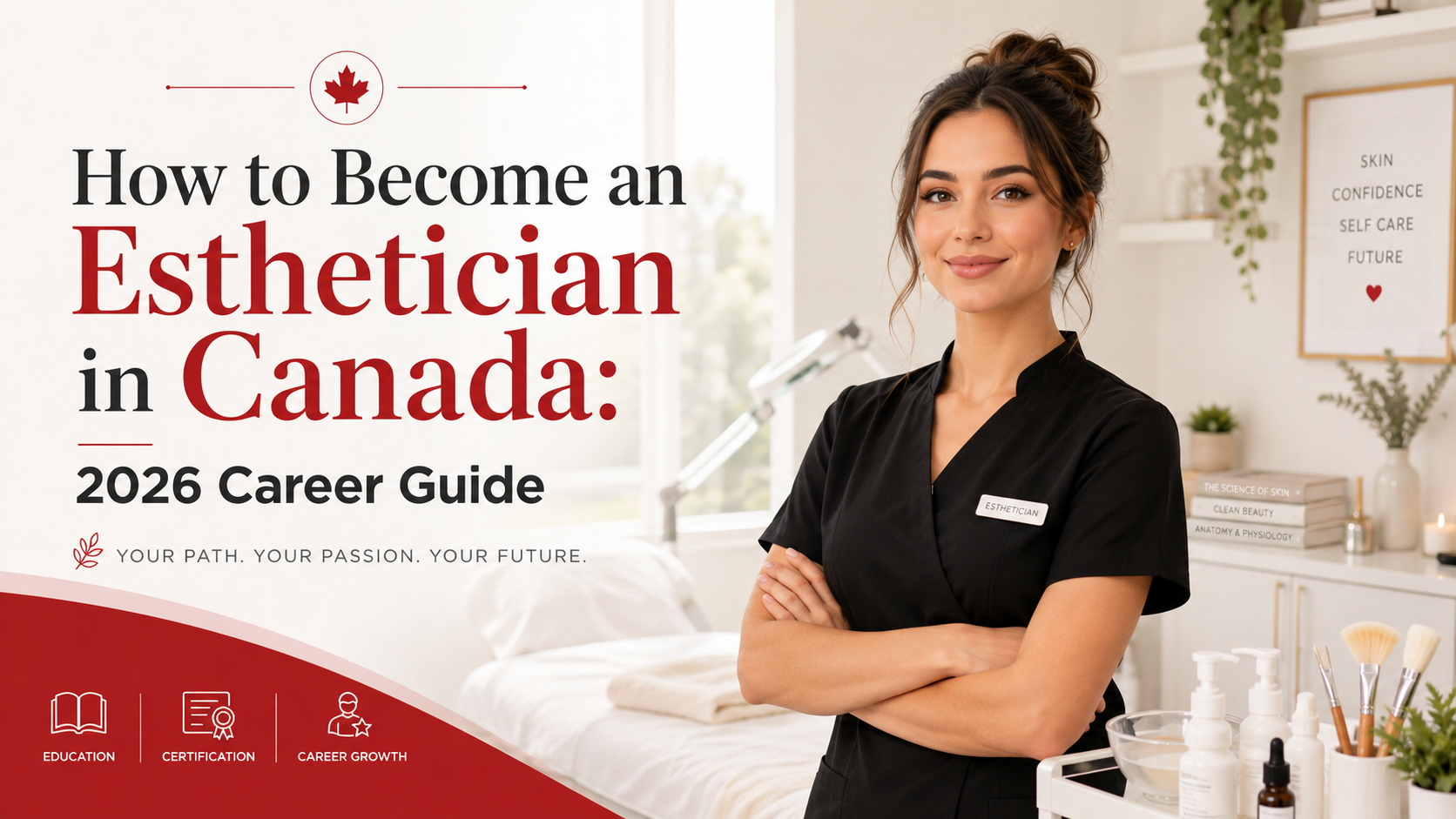
If you’ve ever left a facial appointment thinking “I could do this for a living,” you’re not alone. Skincare and beauty services are one of the few industries where demand keeps climbing no matter what the economy is doing, and estheticians are the people behind most of it: facials, waxing, lash and brow work, body treatments, the whole list.
The catch is that nobody really explains how to get started. Do you need a license? A diploma? Can you just take a weekend course and start booking clients? Here’s the honest breakdown of what it takes to become an esthetician in Canada, what it costs, and what you can expect to earn once you’re working.
What Does an Esthetician Do Exactly?
An esthetician focuses on skin, not hair or nails (that’s a cosmetologist’s territory, though the lines blur at a lot of salons). Day to day, that usually means:
- Facials and skin treatments for different skin types and concerns
- Waxing and hair removal
- Eyebrow and lash services, including tinting and extensions
- Body treatments like exfoliation and wraps
- Makeup application for events, photoshoots, or bridal work
- Product recommendations and basic skincare consultations
Some estheticians stop there. Others go further into medical aesthetics, working alongside dermatologists or in cosmetic clinics doing more advanced procedures. More on that distinction below.
Do You Need a License to Work as an Esthetician in Canada?
This trips people up. Unlike nursing or hairstyling in some provinces, esthetics isn’t a government-licensed profession across most of Canada. There’s no single national board handing out esthetician licenses.
What actually matters is training. Employers, particularly spas, clinics, and skincare brands, want to see a diploma or certificate from a recognized program before they’ll hire you. Private career colleges offering esthetics training in Ontario are regulated under the Private Career Colleges Act, so the program itself is vetted even if the individual graduate isn’t “licensed” in the traditional sense.
The exception is specialized procedures. Services like laser hair removal or certain injectables may fall under provincial health regulations or require additional certification depending on where you work. If you’re eyeing medical aesthetics specifically, budget extra time for that layer of training.
Steps to Become an Esthetician
- Finish high school (or the equivalent). Most esthetics programs require a high school diploma or GED. Mature student status is usually available if you’re 19 or older without one.
- Choose a program. Esthetics training runs anywhere from a few months to about a year, depending on how comprehensive it is. A full program at ERICC’s Aesthetics program runs 12 months and covers everything from skin science to business management, not just the hands-on techniques.
- Complete hands-on training. This is the part that actually prepares you for a job. Look for programs with real clinic hours or salon placements, not just classroom instruction. Clients don’t care how well you can describe a facial in theory.
- Get any required clearances. Depending on the program, you may need a medical certificate, a police vulnerable sector check, and Standard First Aid/CPR certification before you can start your placement.
- Start working or launch your own business. Once you graduate, you can apply to spas, salons, hotel resorts, dermatology clinics, or skincare brands. Plenty of estheticians eventually go independent and build their own client base instead.
How Much Do Estheticians Earn in Canada?
This is the part everyone actually wants to know, so let’s not dance around it.
According to Government of Canada Job Bank wage data, estheticians in Ontario typically earn between $17.60 and $30.00 per hour, with wages naturally climbing as you build experience, specialize, or move into management. On the low end, that’s closer to entry-level spa work. On the high end, you’re looking at experienced estheticians in cosmetic clinics or those running their own book of clients.
A few things move that number up faster than time on the job alone: specializing in lash extensions or medical aesthetics, working in a higher-cost city, or building a loyal client base that follows you if you switch employers. Tips also aren’t unusual in spa settings, so take hourly figures as a floor, not the whole picture.
Where Can Esthetics Graduates Work?
Esthetics is one of the more flexible career paths out there because the training transfers across a lot of settings:
- Salons and day spas
- Hotel and resort spas
- Dermatology and cosmetic clinics
- Skincare brands (think retail, education, or product demo roles)
- Independent or mobile beauty businesses
Some grads use esthetics as a launchpad into related roles too, like makeup artistry, esthetics instruction, or eventually medical aesthetics, which involves more advanced procedures and typically pays more once you’ve built the additional training.
Esthetician vs. Medical Esthetician: Quick Distinction
People mix these up constantly. A standard esthetician handles facials, waxing, and general skincare. A medical esthetician (or medical aesthetician) works with more advanced treatments, often in a clinical setting, sometimes alongside physicians. If you’re drawn to the science side of skincare more than the spa side, medical aesthetics is worth looking into once you’ve got your foundational training.
Is Esthetics a Good Career Choice?
Depends what you’re after, honestly. If you want predictable 9-to-5 hours, it’s not that. But if you want a career where you can work for someone else while you build experience, then eventually go independent or open your own studio, esthetics gives you that option in a way a lot of careers don’t. You also get to see the direct result of your work on someone’s face at the end of every appointment, which sounds small until you’ve done a job where nobody ever notices what you did.
Choosing an Esthetics Program
Not all programs are created equal, so before enrolling, check for:
- Real clinic or salon hours, not just lecture time
- Small class sizes so you actually get instructor feedback
- A curriculum that goes beyond facials into business basics, since a lot of estheticians eventually run their own client list or business
- Flexible scheduling if you’re working or studying part-time
- Field placement opportunities to build real experience before graduation
Ready to Get Started?
If you’re serious about a future in skincare and beauty, the fastest way forward is hands-on training from people already working in the industry. ERICC’s Aesthetics program covers everything from skin science to business management over 12 months, with practical clinic hours built in.
Learn more about admissions and see what it takes to apply.