



A medical office administrator plays a central role in how healthcare centers operate across Canada. While doctors and nurses focus on treating patients, administrative staff keep clinics, hospitals, and specialist offices running smoothly behind the scenes. A medical office administrator supports daily operations by scheduling appointments, maintaining records, processing billing, and coordinating communication, ensuring patient care continues without disruption.
What are the daily tasks of a medical office administrator? Below, we break down the role, responsibilities, and skills needed to manage them confidently in real clinic environments.
Why Medical Office Administration Matters
In healthcare, even minor administrative mistakes can bring about larger issues. Missed appointments, unfinished records, or delayed paperwork can affect both patients and doctors.
Administrative professionals reduce such risks by keeping systems organized and information accurate. Their work supports patient confidence, regulatory compliance, and steady clinic operations. In Canada’s regulated healthcare system, this role remains consistently important in both public and private healthcare environments.
Core Responsibilities of a Medical Office Administrator
Many graduates enter the field after completing a Medical office administrator program that prepares them to work in clinics, hospitals, dental offices, and rehabilitation centers. Their primary responsibility is to keep healthcare offices organized and support clinical teams throughout the day.
Key responsibilities include:
- Managing appointments and patient flow
- Sustaining accurate patient records
- Processing billing and insurance documentation
- Coordinating referrals and internal communication
Accuracy matters at every step. Even small management errors can delay care, create additional follow-up work, or cause frustration for patients and staff.
Key Skills Needed for Daily Medical Office Administration Tasks
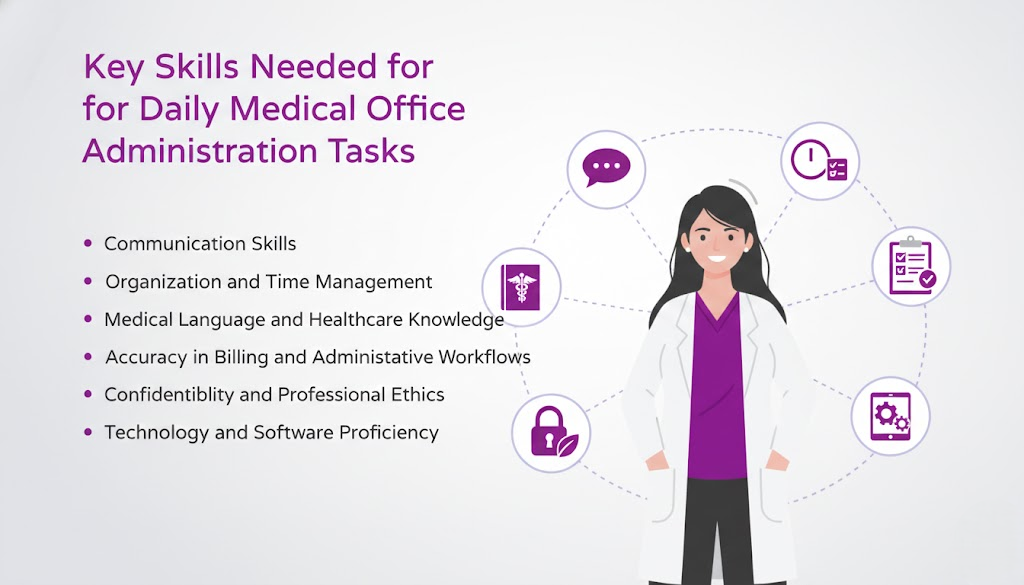
The mandatory skills that you need to work at a medical center are as follows:
- Communication Skills
Clear and skilled communication is essential in healthcare settings. Administrators speak with patients, healthcare providers, and external organizations daily, often handling sensitive or urgent information. Strong communication ensures instructions are understood, questions are answered accurately, and patients feel reassured.
- Organization and Time Management
Healthcare offices operate on structured schedules with limited flexibility. Administrators manage appointments, documentation, and billing while responding to unanticipated changes. Strong organizational skills help prevent appointment conflicts and maintain smooth daily operations.
- Medical Language and Healthcare Knowledge
Understanding medical terminology supports accurate documentation and effective coordination with clinical staff. Familiarity with medical procedures and electronic medical record systems allows administrators to complete tasks correctly and avoid preventable errors.
- Accuracy in Billing and Administrative Workflows
Billing and insurance tasks depend on precise information. Incorrect entries can result in claim delays or rejections. Attention to detail helps reduce these issues and limits confusion for patients and providers.
- Confidentiality and Professional Ethics
Medical office administrators handle confidential patient information and must comply with Canadian privacy regulations, such as PHIPA. Trustworthy data administration and sound judgment are important for preserving confidence and observance.
- Technology and Software Proficiency
In today’s medical offices, digital systems power everything from scheduling to billing. Administrators navigate these tools with confidence, ensuring smooth operations and safeguarding sensitive patient information.
Education and Career Preparation in Canada
Most Canadian healthcare employers prefer candidates who complete formal training before entering the workplace. A medical office administrator certificate demonstrates that a candidate understands medical records, office systems, and regulatory requirements from the start.
When researching training options, students often look for programs that reflect Canadian healthcare standards, incorporate real-world clinic workflows, and prioritize practical skill development over purely theoretical instruction. Structured education helps graduates transition into medical offices with certainty and job-ready skills.
Career Outlook in Canada
Medical office administration professionals are employed in clinics, hospitals, dental practices, and community health centers nationwide, including graduates from the best medical office administrator programs in Canada. With experience, some advance to senior administrative or clinic coordinator roles, while others choose long-term office positions.
Healthcare facilities continue to rely on trained administrative staff, making this role a stable, consistent career option across many regions of Canada.
FAQs
A medical office administrator manages scheduling, patient records, billing, referrals, and daily office coordination in healthcare settings. Their role supports clinical staff and ensures patients experience smooth, organized care.
Yes. Healthcare facilities across Canada rely on trained administrative professionals. The role offers stable employment, consistent demand, and opportunities for advancement within clinics and healthcare organizations.
Most employers prefer candidates who have completed a recognized medical office administration certificate program. Formal training helps ensure familiarity with Canadian healthcare systems, privacy regulations, and office software.
Key skills include communication, organization, medical terminology, attention to detail, confidentiality, and confidence in using healthcare software systems.
They work in clinics, hospitals, dental offices, rehabilitation centers, specialist practices, and community health facilities across Canada.
Conclusion
Medical office administration is a practical healthcare role that requires organization, attention to detail, and strong communication skills. Administrators help patients by ensuring records are accurate, schedules are set, and clinics run smoothly.
For those seeking a healthcare role without direct clinical responsibilities, this path offers steady employment, clear expectations, and long-term relevance in the Canadian healthcare system.